Energise Africa at a glance
- £50 million raised from UK investors
- 5,000+ individual investors
- 250+ clean energy projects supported, across 24 businesses
- 1.1 million+ people connected to renewable energy
- 8,000+ SMEs supported
- Active across 17 African countries
- £36 million repaid to investors
£50 million has been raised from UK investors and deployed into clean energy businesses across Africa through Energise Africa, a crowdfunding investment platform developed with R&D support from the UK’s Transforming Energy Access (TEA) platform.
Since launching in 2017, the platform has helped connect more than 1.1 million people to renewable energy, supported over 250 clean energy projects, and enabled more than 8,000 small and micro-sized enterprises to benefit from reliable power.
Across Africa, these businesses are developing innovative solutions that can transform lives. Yet access to finance remains one of the biggest barriers to growth. Recognising this challenge, Energise Africa was created to connect UK investors directly with clean energy businesses, opening up funding opportunities that had previously been difficult to access.
As Ray Coyle, Co-Founder of Energise Africa, explains:
“Solar energy access in Africa was being constrained because traditional banks and financial institutions weren’t prepared to provide working capital finance to solar businesses. The businesses needed access to the upfront finance to manufacture and supply clean energy solutions to families and businesses with no upfront cost. By connecting UK people directly to these solar businesses, Energise Africa would bridge the climate finance gap.”
What makes Energise Africa unique is its ability to connect ordinary UK investors directly with energy access businesses. More than 5,000 individuals have invested through the platform, creating a model of people-powered finance that has mobilised over £49 million for clean energy companies operating across 17 African countries.
The platform now supports innovative businesses delivering solar home systems, green mini-grids, clean cooking appliances, electric mobility and productive-use technologies across Africa, helping unlock upfront finance for companies delivering clean energy access at scale.
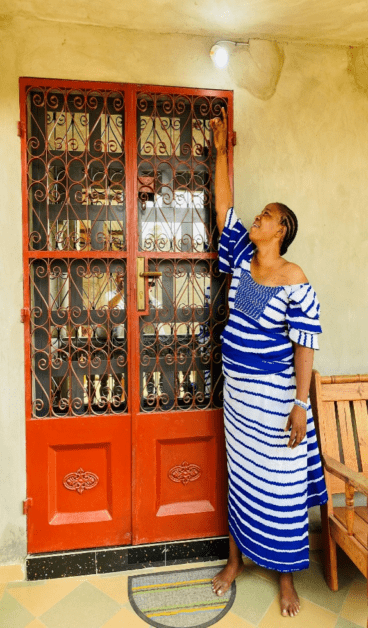
A customer benefitting from energy access in her home
TEA’s role in building a new investment model
For the TEA platform, Energise Africa represents an important example of how UK-backed innovation can create impact far beyond technology development alone.
Rather than supporting a single company or technology, TEA helped to create a platform capable of mobilising private capital across multiple countries and markets, demonstrating how financial innovation can help accelerate energy access at scale.
Through CrowdPower, TEA provided technical assistance and financial support that helped Energise Africa develop innovative financial tools, strengthen the platform and establish new legal structures designed to mitigate risk. These models enable Energise Africa to provide inventory and construction finance to clean energy businesses while reducing currency risk and increasing repayment certainty for investors. TEA helped support the design and implementation of these approaches, creating a mechanism capable of mobilising significantly greater levels of private investment, helping deliver on the ambitions of the Mission 300 initiative to provide electricity access to 300 million people in Africa by 2030.
Turning investment into impact in Benin

1Power Mini Grid, Benin
The real success of Energise Africa can be seen in the businesses and communities that have benefited from investment secured through the platform.
One example is 1Power, a renewable energy developer that secured funding to build nine solar-powered mini-grids in rural Benin.
The company had been awarded a Results Based Finance grant, which would cover a large proportion of construction costs. However, like many clean energy businesses, it still required upfront finance before construction could begin.
Through Energise Africa, more than £1.1 million was raised from private UK investors across three bond offers. The investment helped unlock a further £1.2 million of catalytic capital from CEI Africa, providing the financing needed to move the project forward.
The result was the construction of nine green mini-grids delivering 595kWp of solar energy generation capacity and providing more than 33,000 people in rural northern Benin with access to clean, reliable electricity for the first time.
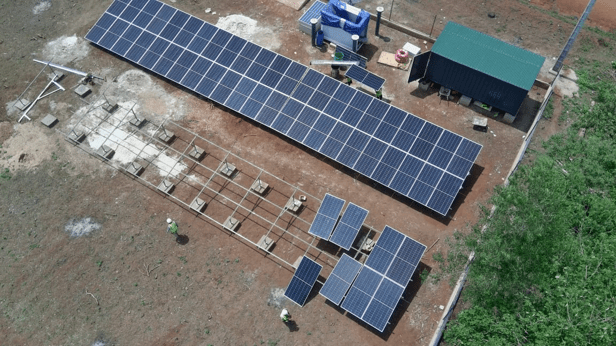
One of the mini grids under construction in Benin
The project is also expected to displace approximately 596 tonnes of carbon emissions each year by replacing diesel-powered alternatives.
While these figures demonstrate the scale of the project, the impact extends beyond electricity connections.
Through collaboration with local communities and partners, productive-use equipment has been introduced alongside the mini-grids to help maximise local economic benefits.
Electric grain mills allow farmers to process crops locally rather than travelling long distances, helping them retain more value from their harvests and increase household incomes. Refrigeration and cooling equipment help preserve food, reduce spoilage and support small businesses. Together, these services are helping strengthen local economies and improve community resilience.

Meeting with villagers in Koussaoukpa, Benin, before mini grid construction begins
Returns, risk and a maturing model
Like all investments, the bonds offered through Energise Africa carry risk, and the platform has always been clear that investors’ capital is at risk and returns are not guaranteed. That risk has, at times, materialised. A number of the clean energy businesses supported through the platform faced significant operational and financial challenges, particularly during the COVID-19 pandemic, when supply chains, currencies and customer repayments across many African markets came under acute pressure. As a result, not every business was able to meet its repayment obligations, and some investors have lost money.
At the same time, the platform has returned more than £36 million to investors to date, and Energise Africa has worked continually to strengthen the model and reduce the risk investors are exposed to. A key development has been the introduction of bonds backed by Results Based Finance, where grant funding (such as that awarded to projects like 1Power in Benin) helps underpin a proportion of project costs and improve repayment certainty. Alongside this, the platform has developed legal structures and financial tools designed to mitigate currency risk and increase security for investors. This honest picture of real impact alongside risk reflects the reality of pioneering finance in emerging markets, and Energise Africa’s commitment to learning, adapting and building a more resilient model for the future.