What happens when key stakeholders for inclusive clean energy access delivery, who have never met, are brought into the same room? That is exactly what we set out to explore in Nairobi through a workshop hosted by the Transforming Energy Access Disability Support Service (DSS).
In April 2026, the Transforming Energy Access (TEA) platform convened 40 members in Nairobi, Kenya, including people with disabilities, representatives from organisations of persons with disabilities (OPDs), Transforming Energy Access partners, and disability innovators for a hands-on workshop titled ‘Co-Designing Disability-Inclusive Energy Access’. Designed and delivered by the Global Disability Innovation (GDI) Hub, London, with Senses Hub, Nairobi, as the local engagement partner, a series of interactive sessions explored key needs, barriers, and opportunities to maximise the impact of the clean energy transition for people with disabilities.
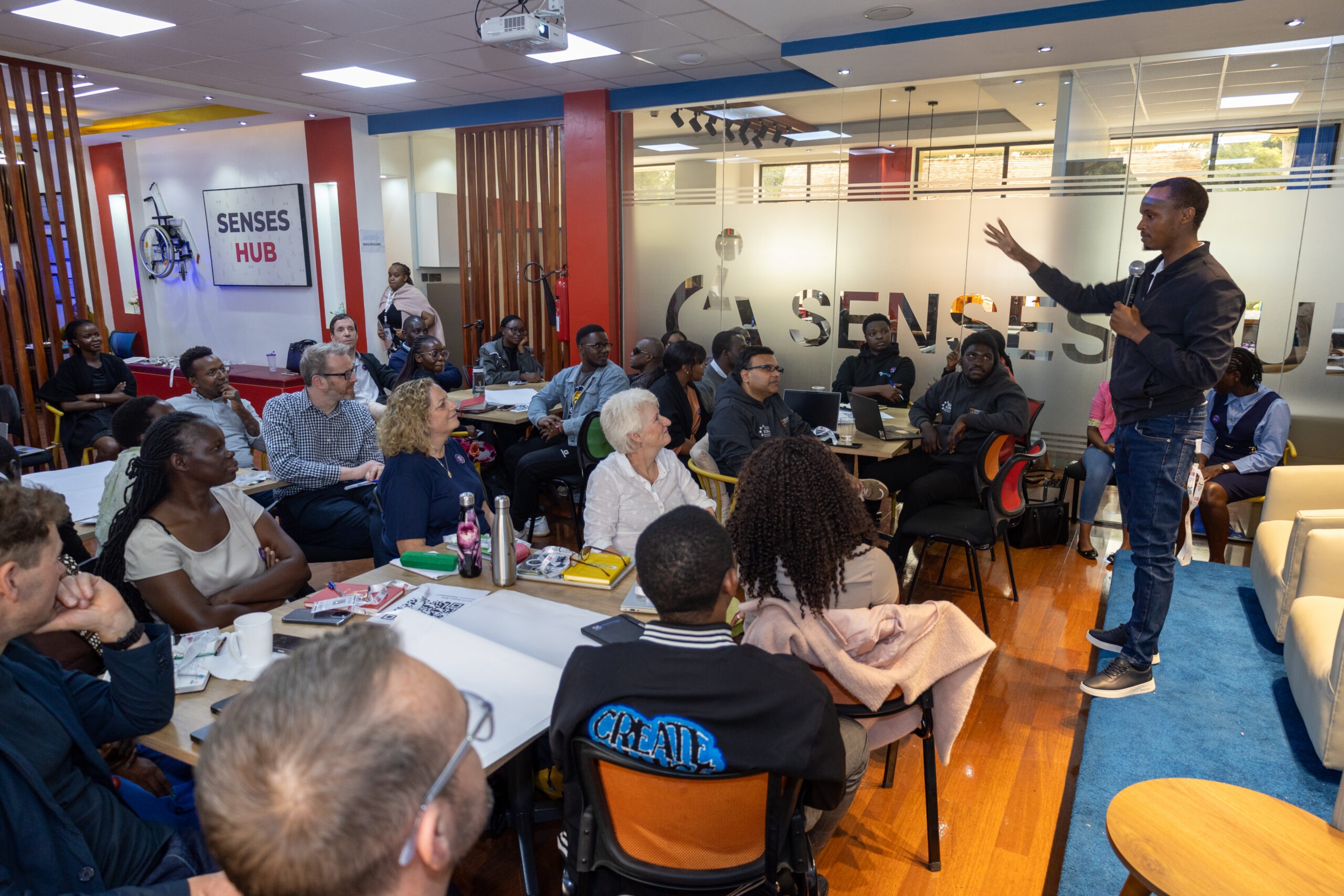
Photo from the co-design workshop, when participants engaged in a warm-up activity
Why does this matter?
Globally, an estimated 1.3 billion people live with some form of disability, many of whom reside in the same communities targeted by Transforming Energy Access-funded energy access programmes.
For people with disabilities, energy needs are not limited to lighting or cooking but are also linked to the use of mobility aids, communication devices, accessibility infrastructure (including elevators), and healthcare equipment. Nearly 50% of the WHO – listed priority assistive technologies require electricity or rechargeable or disposable batteries. So, being locked out of clean energy solutions is not an inconvenience but a compounding disadvantage that intersects with poverty, isolation, and poor health outcomes.
This provides a clear alignment and a critical need to localise Sustainable Development Goal 7 (SDG 7), which calls for universal access to affordable, reliable, sustainable, and modern energy, with the principles of the UN Convention on the Rights of Persons with Disabilities (CRPD). The CRPD emphasises equal access and participation for people with disabilities across all aspects of development – energy access is essential to ensure these rights are upheld. Yet, the reality falls short.
The TEA-DSS white paper,‘Opportunities for Disability-Inclusive Energy Access’, argues that people with disabilities are often excluded from just transition agendas and are less likely to become early adopters of the emerging clean energy systems, services, or products, despite having higher energy needs. This exclusion can be driven by a lack of awareness, knowledge, and assumptions such as:
- That a standard product or service interface works for everyone.
- That a product usable by one is usable by all.
- That inclusion and accessibility can be added later, if needed.
The co-design workshop sought to challenge these assumptions by creating a shared space where people with disabilities, energy practitioners, and disability innovators could engage through critical reflections and collaborative solutions-building.
“Disability inclusion is not an event; it is a journey. To build your confidence on that journey, you need to work with a partner who will support you throughout, because persons with disabilities are diverse and the work is evolving.”
Sally Nduta, United Disabled Persons of Kenya
What happened at the workshop?
The workshop was structured to spark meaningful conversations, demonstrate the value of co-design, learn from disability innovation practices, and inspire ambitious disability inclusion actions among TEA partners. In mixed groups, covering diverse professional backgrounds and disabilities, the workshop participants:
- Exchanged energy needs, usage patterns, and barriers: Participants mapped their monthly household energy use across activities, including cooking, cleaning, cooling, heating, communication, etc. Using a guided worksheet, they reflected on their daily energy realities and shared experiences in small group discussions. This broke down some assumptions such as:
- Sign-language users require well-lit environments throughout the day, essential to access work and activities of daily life.
- Energy for entertainment and communication is key for people who spend more time indoors.
- Power outages make people on electric wheel-chair anxious, often forcing them to miss school or work.
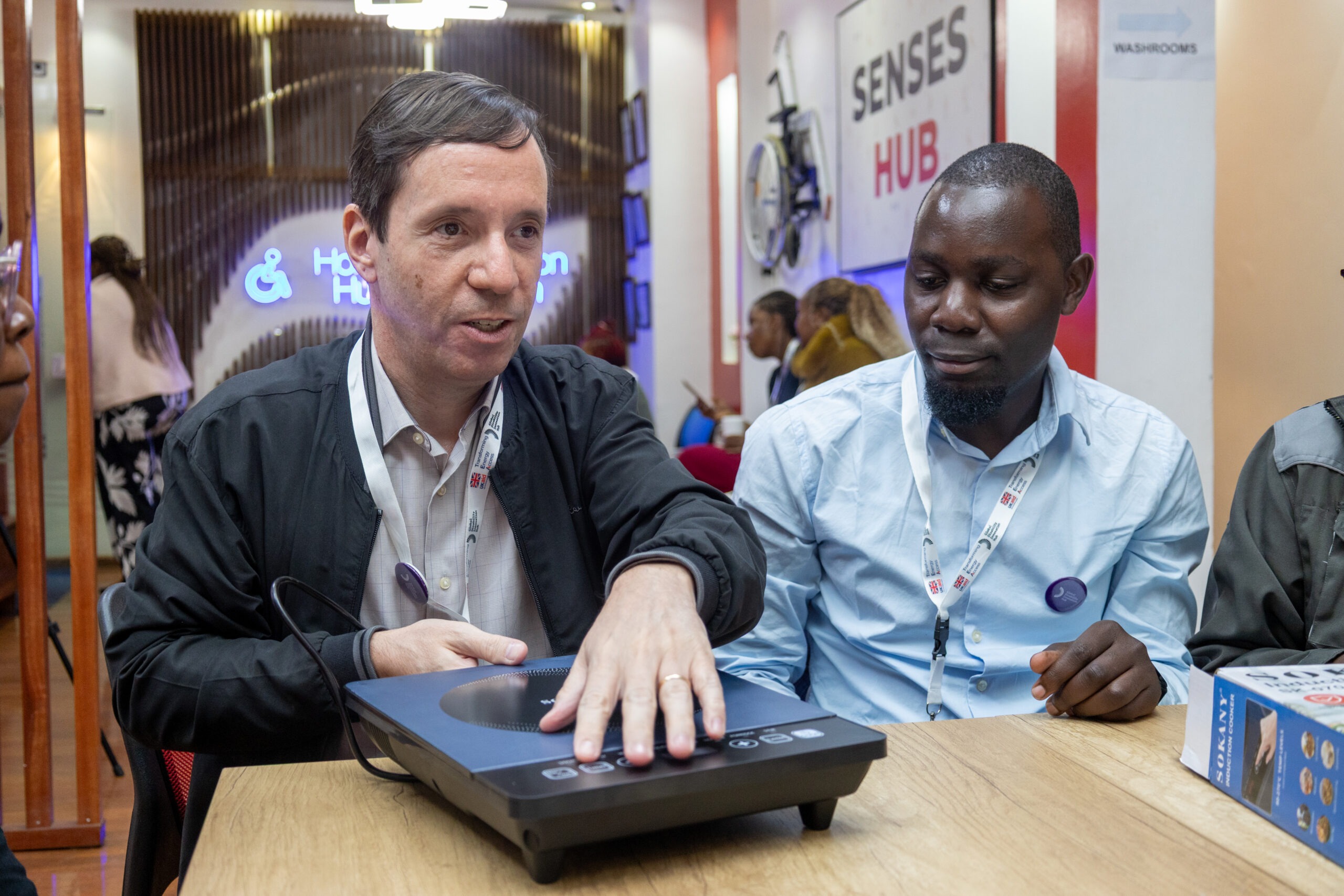
Participants testing an electric induction stove, during the co-design workshop
2. Tested energy products collaboratively: In small groups, participants audited a range of modern energy products, including an electric kettle, a room heater, a solar pedestal fan, an electric induction stove, and a smart cooking pot. Guided by a GDI Hub-prepared worksheet, the accessibility audit was led by people with mobility, visual, hearing, and sensory impairments. Transforming Energy Access partners documented insights as barriers and enablers across three areas: 1) product and packaging design, 2) product information and customer support, and 3) built environment compatibility and ergonomics. Based on the gathered feedback, each group co-developed a practical product adaptation and redesign brief. Here is a sample of presented recommendations:
Smart cooking pot: Redesign the buttons with Braille, provide an easy-to-read digital product manual, include an audio interface to distinguish button operations, and add a detachable safety handle to the cooking pot.
Solar-powered pedestal fan: Integrate clear light-based indication for fan speed and provide easy-to-understand guidance for maintenance and repair.
Electric room heater: Add a safety lock to the wheels at the bottom, redesign the handle for better grip and durability, and shift the switches to the top of the appliance for improved accessibility.
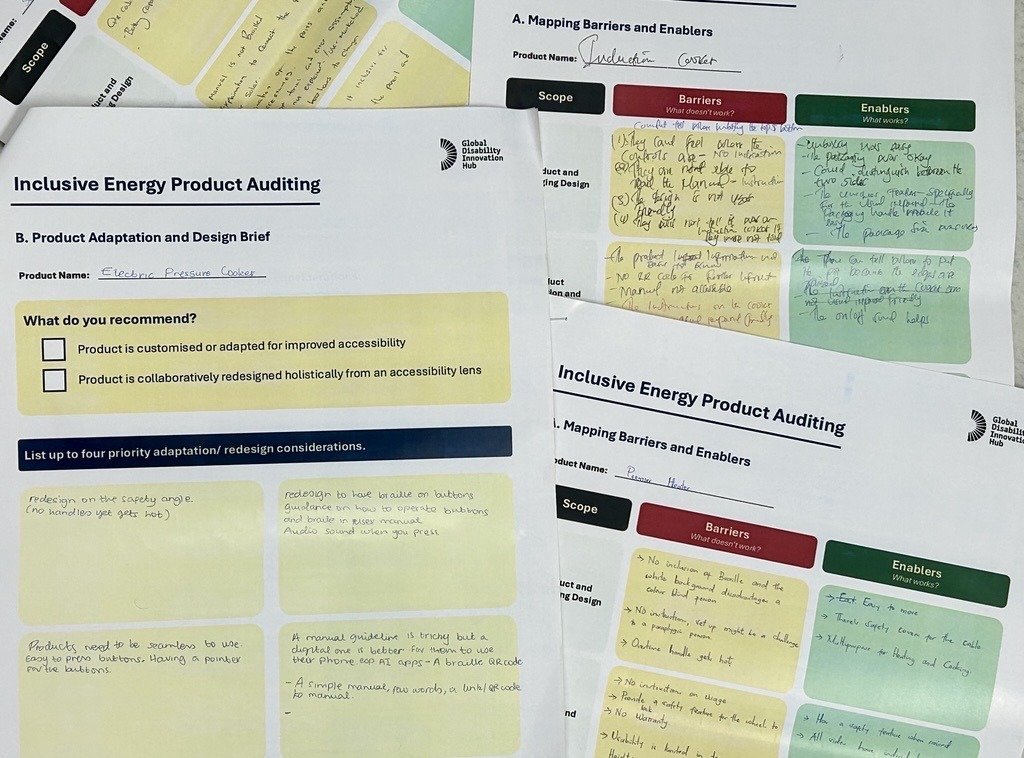
Sample worksheets from the clean energy product auditing session
3. Learnt from disability innovation practices: Ben Hardman, Head of Innovation Ecosystems, GDI Hub, moderated a panel discussion with Jorgs Mbugwa, CEO, EBikes Africa; Bradley Heslop, Co-CEO, Dot Glasses; and Bernard Chiira, CEO, AT4D. The panel emphasised the importance of positioning disability innovation as an entrepreneurial opportunity and not a charity cause. It also reinforced the need to recognise people with disabilities as equal customers who deserve the same range of choices in clean energy solutions.
“People with disabilities represent a large, underserved consumer base with distinct energy needs that the sector has barely begun to address. Disability-inclusive energy access is not only a rights-based imperative. It is a market opportunity. GDI Hub is facilitating meaningful partnerships among clean energy and disability innovators to unlock this.”
Ben Hardman, Head of Innovation Ecosystems, GDI Hub
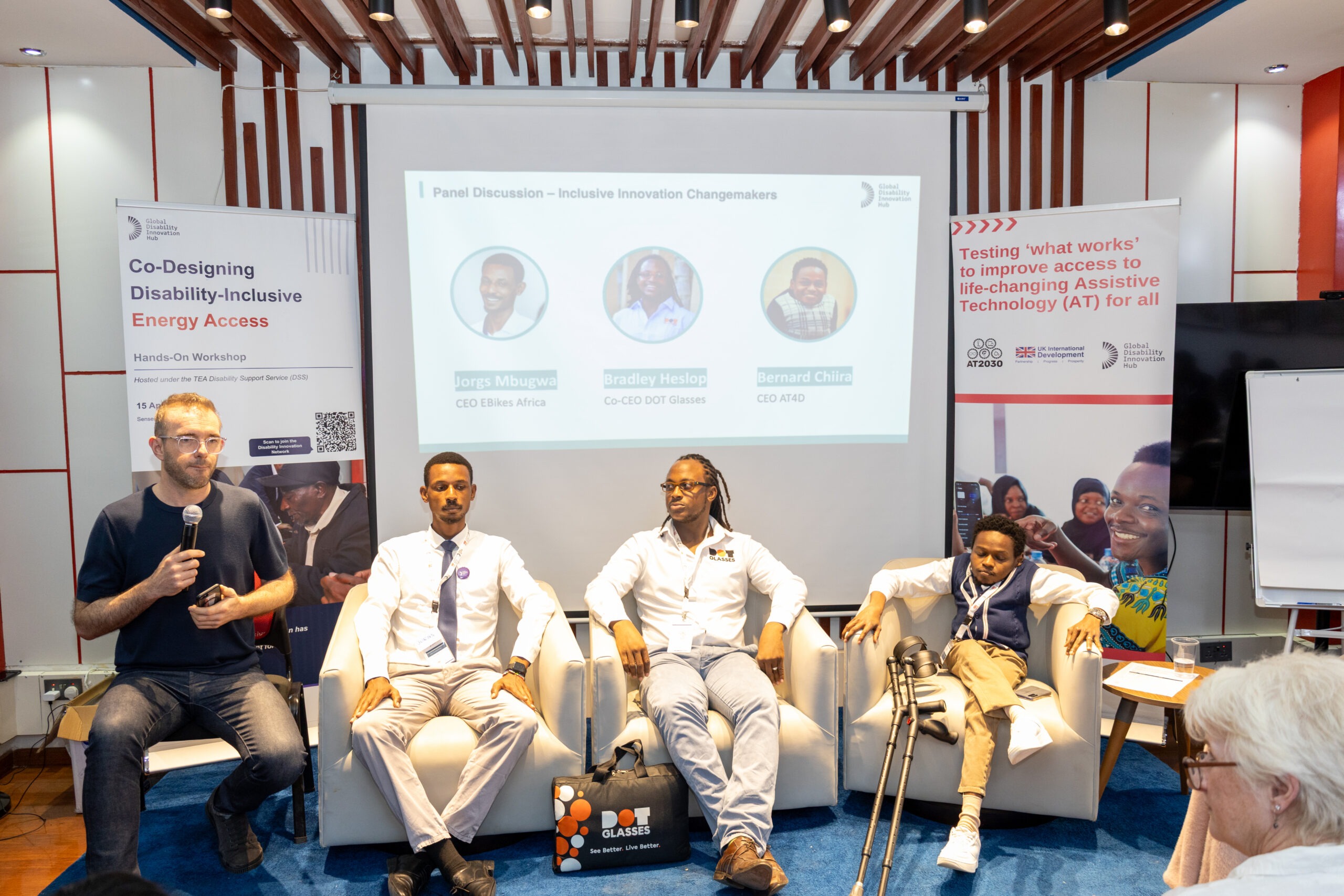
Panel discussion on Inclusive Innovation, moderated by Ben Hardman, GDI Hub
4. Built capacity on disability inclusion action planning: Drawing on reflections from representatives of organisations of persons with disabilities (OPDs), GDI Hub presented an easy-to-adopt roadmap for embedding disability inclusion into clean energy programmes. The roadmap encouraged TEA partners to collaboratively:
- Set clear ambition for disability inclusion and innovation from the outset and not as an afterthought,
- Map internal and external barriers to achieving them,
- Identify entry points for intervention,
- Prepare an action plan that is specific, measurable, and relevant.
People with Disabilities as Co-Designers
In the workshop, organisations of persons with disabilities (OPDs) engaged alongside assistive technology innovators, inclusive designers, and TEA programme managers in a shared space of expertise. Each member brought a distinct form of knowledge and were guided by an inclusive and easy-to-use audit methodology. This collaboration shifted people with disabilities from passive beneficiaries of the clean energy transition to active contributors, co-designers, testers, and knowledge holders.
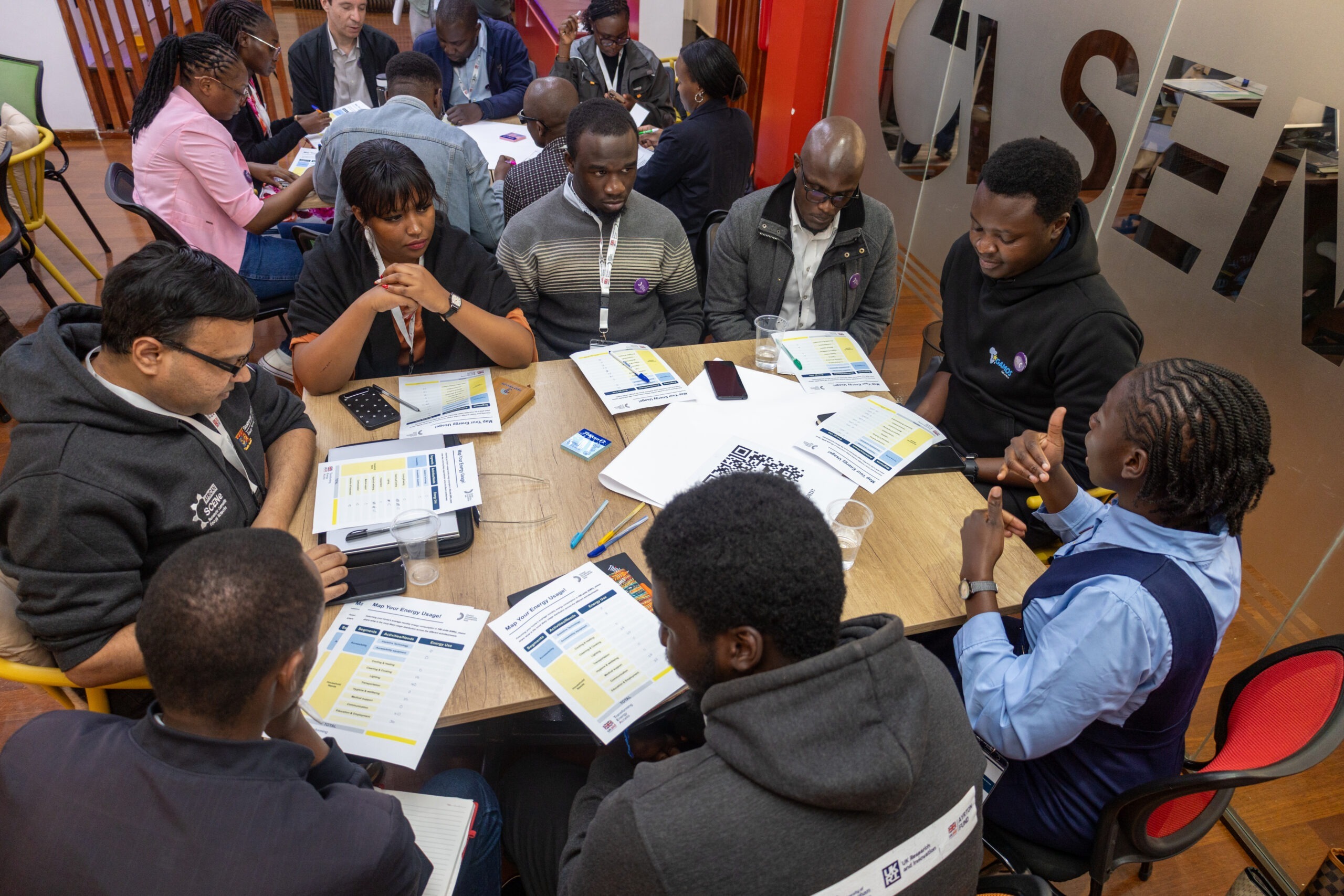
Participants at the co-design workshop working in small mixed groups for mapping energy needs and usage
“Inclusive design is not a disability-specific solution. It is simply good design that works for everybody. That is such a clear win-win and something we can instil with more of our [TEA] partners. Good product design gives a market advantage and helps people with disabilities at the same time.”
Dr. Angus Vantoch-Wood, Carbon Trust Programme Lead, Transforming Energy Access
The co-design workshop is a milestone and a starting point. As an activity delivered at the end of TEA-2.0, it was the first time TEA partners collectively had an opportunity to engage with the disability community in person and generate shared insights.
We believe this demonstrated the creative potential of inclusive practices and solutions and has particularly equipped TEA partners to embrace inclusive design as a mindset and methodology, shape disability-responsive programming, and maximise impact for the hardest-to-reach in their journey ahead.